Tcp服务端类 More...
#include <sttnet.h>
Public Member Functions | |
| void | putTask (const std::function< int(TcpFDHandler &k, TcpInformation &inf)> &fun, TcpFDHandler &k, TcpInformation &inf) |
| 把一个任务放入工作线程池由工作线程完成 | |
| TcpServer (const unsigned long long &maxFD=1000000, const int &buffer_size=256, const size_t &finishQueue_cap=65536, const bool &security_open=true, const int &connectionNumLimit=20, const int &connectionSecs=1, const int &connectionTimes=6, const int &requestSecs=1, const int &requestTimes=40, const int &checkFrequency=60, const int &connectionTimeout=60) | |
| 构造函数,默认是允许最大1000000个连接,每个连接接收缓冲区最大为256kb,启用安全模块。 | |
| bool | startListen (const int &port, const int &threads=8) |
| 打开Tcp服务器监听程序 | |
| bool | setTLS (const char *cert, const char *key, const char *passwd, const char *ca) |
| 以兼容模式启用双向 TLS(mTLS)。 | |
| bool | setTLS (const char *cert, const char *key, const char *passwd="") |
| 启用普通单向 TLS,适用于常见 HTTPS/WSS 服务。 | |
| bool | setTLS (const char *cert, const char *key, const char *passwd, const char *ca, TLSClientAuthMode clientAuth) |
| 启用 TLS 并显式选择客户端证书校验模式。 | |
| void | redrawTLS () |
| 撤销TLS加密,ca证书等 | |
| void | setSecuritySendBackFun (std::function< void(TcpFDHandler &k, TcpInformation &inf)> fc) |
| 设置违反信息安全策略时候的返回函数 | |
| void | setGlobalSolveFunction (std::function< bool(TcpFDHandler &k, TcpInformation &inf)> fc) |
| 设置全局备用函数 | |
| void | setFunction (const std::string &key, std::function< int(TcpFDHandler &k, TcpInformation &inf)> fc) |
| 设置key对应的收到客户端消息后的回调函数 | |
| void | setGetKeyFunction (std::function< int(TcpFDHandler &k, TcpInformation &inf)> parseKeyFun) |
| 设置解析出key的回调函数 | |
| bool | stopListen () |
| 停止监听 | |
| virtual bool | close () |
| 关闭监听和所有已连接的套接字 | |
| virtual bool | close (const int &fd) |
| 关闭某个套接字的连接 | |
| void | setConnectStrategy (const stt::security::RateLimitType &type) |
| 设置“连接速率限流”所使用的策略。 | |
| void | setRequestStrategy (const stt::security::RateLimitType &type) |
| 设置“IP 级请求限流”所使用的策略。 | |
| void | setPathStrategy (const stt::security::RateLimitType &type) |
| 设置“path 级请求限流”所使用的策略。 | |
| void | setPathLimit (const std::string &path, const int ×, const int &secs) |
| 设置某个路径的额外限流规则(path 级)。 | |
| void | setCloseFun (std::function< void(const int &fd)> closeFun) |
| 设置关闭tcp连接之后调用的函数 | |
| void | setMaxPendingWriteBytes (const size_t bytes) |
| 设置每连接待发送数据高水位。 | |
| void | setWriteBudgetPerEvent (const size_t bytes) |
| 设置 Reactor 单次处理一个连接的最大发送字节数。 | |
| void | setMaxHttpHeaderBytes (const size_t bytes) |
| 设置 HTTP 请求和 WebSocket 握手头上限。 | |
| void | setMaxPendingWorkerTasks (const size_t tasks) |
| 设置 WorkerPool 尚未开始执行的任务上限。 | |
| void | setReactorMessageBudgets (const size_t workerCompletions, const size_t sendReadyNotifications) |
| 设置单次 Reactor 唤醒处理的跨线程消息预算。 | |
| void | setSocketOptions (const ServerSocketOptions &options) |
| 设置新接收 TCP 连接的常用套接字参数。 | |
| void | setGracefulShutdownTimeout (const size_t milliseconds) |
| 设置 close()/stopListen() 等待在途请求和发送队列排空的最长时间。 | |
| ServerMetricsSnapshot | getMetrics () const noexcept |
| 获取服务器运行指标快照。 | |
| bool | isListen () |
| 返回对象的监听状态 | |
| int | getListenPort () const noexcept |
| 获取当前实际监听端口。 | |
| SSL * | getSSL (const int &fd) |
| 查询和服务端的连接,传入套接字,返回加密的SSL句柄 | |
| virtual | ~TcpServer () |
| TcpServer 类的析构函数 | |
Protected Types | |
| enum class | WriteFlushResult { Drained , WaitWrite , WaitRead , Reschedule , Error } |
Protected Member Functions | |
| int | enqueueWrite (const std::shared_ptr< ConnectionWriteState > &state, std::string data) |
| void | requestQueuedClose (const std::shared_ptr< ConnectionWriteState > &state) |
| void | requestCloseAfterFlush (const int &fd, const uint64_t expectedConnection=0) |
| void | publishSendReady (const std::shared_ptr< ConnectionWriteState > &state) |
| void | notifyReactor () noexcept |
| bool | hasPendingReactorWork () |
| void | clearReactorQueues () |
| void | drainReactorWork (const int &epollFD) |
| size_t | drainWorkerResults (const size_t budget) |
| size_t | drainSendReady (const int &epollFD, const size_t budget) |
| void | applyAcceptedSocketOptions (const int &acceptedFD) const noexcept |
| void | reportReactorStartup (const bool success) |
| void | advanceGracefulDrain () |
| void | prepareHandler (TcpFDHandler &handler, const int &fd) |
| void | prepareQueuedHandler (TcpFDHandler &handler, const int &fd) |
| void | prepareQueuedHandler (TcpFDHandler &handler, const int &fd, const uint64_t expectedConnection) |
| WriteFlushResult | flushConnectionWrites (TcpFDInf &connection) |
| bool | updateConnectionEvents (const int &epollFD, TcpFDInf &connection, const bool &wantWrite) |
| void | handleSendReady (const int &epollFD, SendReadyMessage message) |
| void | publishWorkerResult (WorkerMessage message) |
| void | scheduleBufferedRead (const int &fd, const uint64_t connection) |
Detailed Description
Tcp服务端类
- Note
- 默认底层实现是epoll边缘触发+套接字非阻塞模式
Member Enumeration Documentation
◆ WriteFlushResult
|
strongprotected |
Constructor & Destructor Documentation
◆ TcpServer()
|
inline |
构造函数,默认是允许最大1000000个连接,每个连接接收缓冲区最大为256kb,启用安全模块。
- Note
- 打开安全模块会对性能有影响
- Parameters
-
maxFD 服务对象的最大接受连接数 默认为1000000 buffer_size 同一个连接允许传输的最大数据量(单位为kb) 默认为256kb finishQueue_cap Worker 完成队列(Worker → Reactor)的容量,必须为 2 的幂。
- Note
- 建议容量不小于“峰值完成速率 × Reactor 最坏暂停时间”;环形队列满时进入带锁后备队列。
- Parameters
-
security_open true:开启安全模块 false:关闭安全模块 (默认为开启) connectionNumLimit 同一个ip连接数目的上限(默认20) connectionSecs 连接速率统计窗口长度(单位:秒)(默认1秒) connectionTimes 在 connectionSecs 秒内允许的最大连接次数 (默认6次) requestSecs 请求速率统计窗口长度(单位:秒)(默认1秒) requestTimes 在秒requestSecs内允许的最大请求数量(默认40次) checkFrequency 检查僵尸连接的频率(单位秒钟) -1为不做检查 (默认为60秒) connectionTimeout 连接多少秒内没有任何反应就视为僵尸连接 (单位为秒) -1为无限制 (默认60秒)
◆ ~TcpServer()
|
inlinevirtual |
TcpServer 类的析构函数
- Note
- 会调用close函数关闭
Member Function Documentation
◆ advanceGracefulDrain()
|
protected |
◆ applyAcceptedSocketOptions()
|
protectednoexcept |
◆ clearReactorQueues()
|
protected |
◆ close() [1/2]
|
virtual |
关闭监听和所有已连接的套接字
- Note
- 关闭监听和所有已经连接的套接字,已经注册的回调函数和tls不会删除和redraw
- 会阻塞等待直到全部关闭完成
- 默认先按 setGracefulShutdownTimeout() 配置排空在途 Worker 与发送队列,再强制回收。
- Returns
- true:关闭成功 false:关闭失败
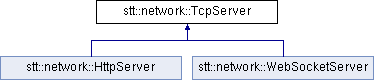
Reimplemented in stt::network::HttpServer, and stt::network::WebSocketServer.
◆ close() [2/2]
|
virtual |
关闭某个套接字的连接
- Parameters
-
fd 需要关闭的套接字
- Note
- 线程安全:服务运行期间从 Reactor 外调用时只提交关闭请求,实际 fd/TLS 释放仍由 Reactor 完成。
- Returns
- true:关闭成功 false:关闭失败
Reimplemented in stt::network::HttpServer, and stt::network::WebSocketServer.
◆ drainReactorWork()
|
protected |
◆ drainSendReady()
|
protected |
◆ drainWorkerResults()
|
protected |
◆ enqueueWrite()
|
protected |
◆ flushConnectionWrites()
|
protected |
◆ getListenPort()
|
inlinenoexcept |
获取当前实际监听端口。
- Returns
- 成功启动后返回实际端口;允许 startListen(0, ...) 由内核选择空闲端口。尚未启动时返回 -1。
◆ getMetrics()
|
inlinenoexcept |
◆ getSSL()
| SSL * stt::network::TcpServer::getSSL | ( | const int & | fd | ) |
查询和服务端的连接,传入套接字,返回加密的SSL句柄
- Warning
- 仅供诊断;服务运行期间不得在 Reactor 外调用 SSL_read/SSL_write/SSL_shutdown。 发送数据应使用 handler API,否则会破坏 TLS 会话的单线程所有权。
- Returns
- 返回加密的SSL指针; 如果不存在此fd或者没有加密 返回nullptr
◆ handleSendReady()
|
protected |
◆ hasPendingReactorWork()
|
protected |
◆ isListen()
|
inline |
返回对象的监听状态
- Returns
- true:正在监听 false:没有在监听
◆ notifyReactor()
|
protectednoexcept |
◆ prepareHandler()
|
protected |
◆ prepareQueuedHandler() [1/2]
|
protected |
◆ prepareQueuedHandler() [2/2]
|
protected |
◆ publishSendReady()
|
protected |
◆ publishWorkerResult()
|
protected |
◆ putTask()
| void stt::network::TcpServer::putTask | ( | const std::function< int(TcpFDHandler &k, TcpInformation &inf)> & | fun, |
| TcpFDHandler & | k, | ||
| TcpInformation & | inf ) |
把一个任务放入工作线程池由工作线程完成
- Note
- 应当把速度慢、会阻塞的io任务放入工作线程池
- Warning
- 可执行对象必须严格按照规定的返回值返回
- Parameters
-
fun 放入工作线程池的可执行对象 -参数:TcpFDHandler &k - 和客户端连接的套接字的操作对象的引用 TcpFDInf &inf - 客户端信息,保存数据,处理进度,状态机信息等 -返回值:-2:处理失败并且需要关闭连接 -1:处理失败但不需要关闭连接 1:处理成功 k 和客户端连接的套接字的操作对象的引用 inf 客户端信息的引用,保存数据,处理进度,状态机信息等
- Note
- 本函数仅应从该连接的 Reactor 回调中调用。过载拒绝会按失败完成消息关闭连接,并计入 worker_task_rejections。
◆ redrawTLS()
| void stt::network::TcpServer::redrawTLS | ( | ) |
撤销TLS加密,ca证书等
◆ reportReactorStartup()
|
protected |
◆ requestCloseAfterFlush()
|
protected |
◆ requestQueuedClose()
|
protected |
◆ scheduleBufferedRead()
|
protected |
Reactor 内延续解析已在用户态缓冲区中的 HTTP 流水线请求。
◆ setCloseFun()
|
inline |
设置关闭tcp连接之后调用的函数
◆ setConnectStrategy()
|
inline |
设置“连接速率限流”所使用的策略。
- Parameters
-
type 策略类型,见 stt::security::RateLimitType 说明。
- Note
- 不调用本函数时,默认策略为 stt::security::RateLimitType::Cooldown 。
◆ setFunction()
|
inline |
设置key对应的收到客户端消息后的回调函数
- Note
- 可以设置多个 ,框架会根据设置顺序依次执行回调函数;也可以设置扔入工作线程池处理的流程,注意设置不同的返回值即可。
- Warning
- 可执行对象必须严格按照规定的返回值返回
- Parameters
-
key 找到对应回调函数的key fc 一个函数或函数对象,用于收到客户端消息后处理逻辑 -参数:TcpFDHandler &k - 和客户端连接的套接字的操作对象的引用 TcpFDInf &inf - 客户端信息,保存数据,处理进度,状态机信息等 -返回值:-2:处理失败并且需要关闭连接 -1:处理失败但不需要关闭连接 0:处理流程已经扔入工作线程池,需要等待处理完成 1:处理成功
◆ setGetKeyFunction()
|
inline |
设置解析出key的回调函数
- Note
- 根据传入的参数把key存入TcpInformation信息中的ctx哈希表。框架会根据key的值找到你注册的处理函数。
- Warning
- 可执行对象必须严格按照规定的返回值返回
- Parameters
-
parseKeyFun 解析key的回调函数 -参数:TcpFDHandler &k - 和客户端连接的套接字的操作对象的引用 TcpFDInf &inf - 客户端信息,保存数据,处理进度,状态机信息等 -返回值:-2:处理失败并且需要关闭连接 -1:处理失败但不需要关闭连接 0:处理流程已经扔入工作线程池,需要等待处理完成 1:处理成功
◆ setGlobalSolveFunction()
|
inline |
设置全局备用函数
- Note
- 找不到对应回调函数的时候会调用全局备用函数
- Parameters
-
fc 一个函数或函数对象,用于收到客户端消息后处理逻辑 -参数:TcpFDHandler &k - 和客户端连接的套接字的操作对象的引用 TcpInformation &inf - 客户端信息,保存数据,处理进度,状态机信息等 -返回值:true:处理成功 false:处理失败 会关闭连接
◆ setGracefulShutdownTimeout()
|
inline |
设置 close()/stopListen() 等待在途请求和发送队列排空的最长时间。
- Parameters
-
milliseconds 超时毫秒数;默认 5000。设置为 0 表示立即强制停止。
- Note
- 超时后框架会丢弃未开始的 Worker 任务并强制关闭网络资源;已经运行的用户任务仍必须自行返回。 超时次数可从 getMetrics() 获取。
◆ setMaxHttpHeaderBytes()
|
inline |
设置 HTTP 请求和 WebSocket 握手头上限。
- Parameters
-
bytes 最大请求头字节数,最小接受值为 1024;默认 64 KiB。
- Note
- 应在 startListen() 前设置,实际值还受服务器总接收缓冲上限约束。
◆ setMaxPendingWorkerTasks()
|
inline |
设置 WorkerPool 尚未开始执行的任务上限。
- Parameters
-
tasks 最大排队任务数,必须大于 0;默认 65536。
- Note
- 应在 startListen() 前设置。达到上限时新任务会被拒绝并按失败结果返回 Reactor,避免突发流量耗尽内存。
◆ setMaxPendingWriteBytes()
|
inline |
设置每连接待发送数据高水位。
- Parameters
-
bytes 最大待发送字节数,必须大于 0;默认 4 MiB。
- Note
- 应在 startListen() 前设置。超过后发送返回 -101,并请求关闭慢客户端,防止无界内存增长。
◆ setPathLimit()
|
inline |
设置某个路径的额外限流规则(path 级)。
- Note
- 这个path和parseKeyFun解析出来的key是一个东西
- Parameters
-
path 需要额外限流的路径,例如 "/login"、"/register"。 times 在 secs 秒内允许的最大请求次数。 secs 统计窗口长度(秒)。
- Note
- setPathLimit 配置的是 额外规则:
- allowRequest 调用时传入的 (times, secs) 仍然会作为 IP 级规则先执行;
- 若 path 命中此配置,则再执行 path 级规则;
- 两者为 AND 关系:任何一层失败即拒绝。
◆ setPathStrategy()
|
inline |
设置“path 级请求限流”所使用的策略。
- Parameters
-
type 策略类型,见 stt::security::RateLimitType 说明。
- Note
- 不调用本函数时,默认策略为 stt::security::RateLimitType::SlidingWindow 。
- 这个path和parseKeyFun解析出来的key是一个东西
◆ setReactorMessageBudgets()
|
inline |
设置单次 Reactor 唤醒处理的跨线程消息预算。
- Parameters
-
workerCompletions 单次最多处理的 Worker 完成消息数。 sendReadyNotifications 单次最多处理的待发送连接通知数。
- Note
- 两个值必须大于 0;默认分别为 2048 和 256。限制预算可防止完成队列在突发流量下长期饿死网络事件。
◆ setRequestStrategy()
|
inline |
设置“IP 级请求限流”所使用的策略。
- Parameters
-
type 策略类型,见 stt::security::RateLimitType 说明。
- Note
- 不调用本函数时,默认策略为 stt::security::RateLimitType::SlidingWindow 。
◆ setSecuritySendBackFun()
|
inline |
设置违反信息安全策略时候的返回函数
- Note
- 违反信息安全策略时候的返回函数,调用完就关闭连接
- Parameters
-
fc 一个函数或函数对象,用于收到客户端消息后处理逻辑 -参数:TcpFDHandler &k - 和客户端连接的套接字的操作对象的引用 TcpInformation &inf - 客户端信息,保存数据,处理进度,状态机信息等 -返回值:true:处理成功 false:处理失败 会关闭连接
◆ setSocketOptions()
|
inline |
设置新接收 TCP 连接的常用套接字参数。
- Parameters
-
options TCP_NODELAY、keepalive、收发缓冲、deferred accept、Fast Open 及 backlog 配置。
- Note
- 应在 startListen() 前设置;无效的缓冲区值会按 0(系统默认)处理。
◆ setTLS() [1/3]
| bool stt::network::TcpServer::setTLS | ( | const char * | cert, |
| const char * | key, | ||
| const char * | passwd, | ||
| const char * | ca ) |
以兼容模式启用双向 TLS(mTLS)。
- Parameters
-
cert 服务器证书链 PEM 文件。 key 与证书匹配的 PEM 私钥。 passwd 私钥密码;未加密时可传空字符串。 ca 用于验证客户端证书的 CA PEM 文件。
- Returns
- 配置加载成功返回 true。
- Note
- 保留四参数版本的历史语义:客户端必须提供有效证书。最低协议版本为 TLS 1.2。 可在运行时安全重载;新上下文只影响后续连接,现有 TLS 会话继续使用原上下文。
◆ setTLS() [2/3]
| bool stt::network::TcpServer::setTLS | ( | const char * | cert, |
| const char * | key, | ||
| const char * | passwd, | ||
| const char * | ca, | ||
| TLSClientAuthMode | clientAuth ) |
启用 TLS 并显式选择客户端证书校验模式。
- Parameters
-
cert 服务器证书链 PEM 文件。 key 与证书匹配的 PEM 私钥。 passwd 私钥密码;未加密时可为空。 ca 客户端证书 CA;Optional/Required 模式必须提供。 clientAuth 客户端证书校验模式。
- Returns
- 配置加载成功返回 true。
◆ setTLS() [3/3]
| bool stt::network::TcpServer::setTLS | ( | const char * | cert, |
| const char * | key, | ||
| const char * | passwd = "" ) |
启用普通单向 TLS,适用于常见 HTTPS/WSS 服务。
- Parameters
-
cert 服务器证书链 PEM 文件。 key 与证书匹配的 PEM 私钥。 passwd 私钥密码;默认无密码。
- Returns
- 配置加载成功返回 true。
◆ setWriteBudgetPerEvent()
|
inline |
设置 Reactor 单次处理一个连接的最大发送字节数。
- Parameters
-
bytes 单次预算,必须大于 0;默认 256 KiB。
- Note
- 应在 startListen() 前设置,用于限制大响应独占 Reactor,改善连接间公平性。
◆ startListen()
| bool stt::network::TcpServer::startListen | ( | const int & | port, |
| const int & | threads = 8 ) |
打开Tcp服务器监听程序
- Parameters
-
port 监听的端口 threads 消费者线程的数量 (默认为8)
- Returns
- true:打开监听程序成功 false:打开监听程序失败
◆ stopListen()
| bool stt::network::TcpServer::stopListen | ( | ) |
停止监听
- Warning
- 仅停止监听(但是套接字也已经无法接收了,它依赖于监听和消费者,所以这个函数没什么意义)
- 不要在 Reactor 同步回调中调用服务级 stopListen()/close();应通知控制线程执行。连接级关闭请用 handler.close()。
- Returns
- true:停止成功 false:停止失败
◆ updateConnectionEvents()
|
protected |
Member Data Documentation
◆ buffer_size
|
protected |
◆ bufferedReadQueue
|
protected |
◆ checkFrequency
|
protected |
◆ clientfd
|
protected |
◆ connection_obj_fd
|
protected |
◆ connectionLimiter
|
protected |
◆ connectionSecs
|
protected |
◆ connectionTimes
|
protected |
◆ ctx
|
protected |
◆ finishQueue
|
protected |
◆ flag1
|
protected |
◆ gracefulDrainRequested
|
protected |
◆ gracefulShutdownCV
|
protected |
◆ gracefulShutdownMutex
|
protected |
◆ gracefulShutdownTimeoutMs
|
protected |
◆ lifecycleMutex
|
protected |
◆ maxFD
|
protected |
◆ maxHttpHeaderBytes
|
protected |
◆ maxPendingWorkerTasks
|
protected |
◆ maxPendingWriteBytes
|
protected |
◆ metricAcceptedConnections
|
protected |
◆ metricAcceptErrors
|
protected |
◆ metricActiveConnections
|
protected |
◆ metricBatchedWriteBuffers
|
protected |
◆ metricBatchedWriteSyscalls
|
protected |
◆ metricClosedConnections
|
protected |
◆ metricGracefulShutdownTimeouts
|
protected |
◆ metricIdleTimeoutChecks
|
protected |
◆ metricIdleTimeoutCloses
|
protected |
◆ metricParsedHttpRequests
|
protected |
◆ metricPeakPendingWorkerTasks
|
protected |
◆ metricPeakPendingWriteBytes
|
protected |
◆ metricPendingWriteBytes
|
protected |
◆ metricQueuedWriteBytes
|
protected |
◆ metricReactorWakeups
|
protected |
◆ metricReactorWakeupsCoalesced
|
protected |
◆ metricRejectedConnections
|
protected |
◆ metricSendReadyQueueOverflows
|
protected |
◆ metricSentBytes
|
protected |
◆ metricTLSHandshakeFailures
|
protected |
◆ metricWorkerQueueOverflows
|
protected |
◆ metricWorkerTaskRejections
|
protected |
◆ metricWriteOverflows
|
protected |
◆ metricWriteSyscalls
|
protected |
◆ overflowFinishMutex
|
protected |
◆ overflowFinishQueue
|
protected |
◆ overflowSendReadyMutex
|
protected |
◆ overflowSendReadyQueue
|
protected |
◆ reactorStartupComplete
|
protected |
◆ reactorStartupCV
|
protected |
◆ reactorStartupMutex
|
protected |
◆ reactorStartupSuccess
|
protected |
◆ reactorThread
|
protected |
◆ requestSecs
|
protected |
◆ requestTimes
|
protected |
◆ security_open
|
protected |
◆ sendReadyBudgetPerWake
|
protected |
◆ sendReadyQueue
|
protected |
◆ serverType
|
protected |
◆ socketOptions
|
protected |
◆ timeoutCandidates
|
protected |
◆ TLS
|
protected |
◆ tlsContextMutex
|
mutableprotected |
◆ unblock
|
protected |
◆ workerCompletionBudgetPerWake
|
protected |
◆ workerEventFD
|
protected |
◆ workerWakePending
|
protected |
◆ workpool
|
protected |
◆ writeBudgetPerEvent
|
protected |
◆ writeRegistry
|
protected |
◆ writeRegistryMutex
|
protected |
The documentation for this class was generated from the following file:
- include/sttnet.h
Generated by
 1.13.2